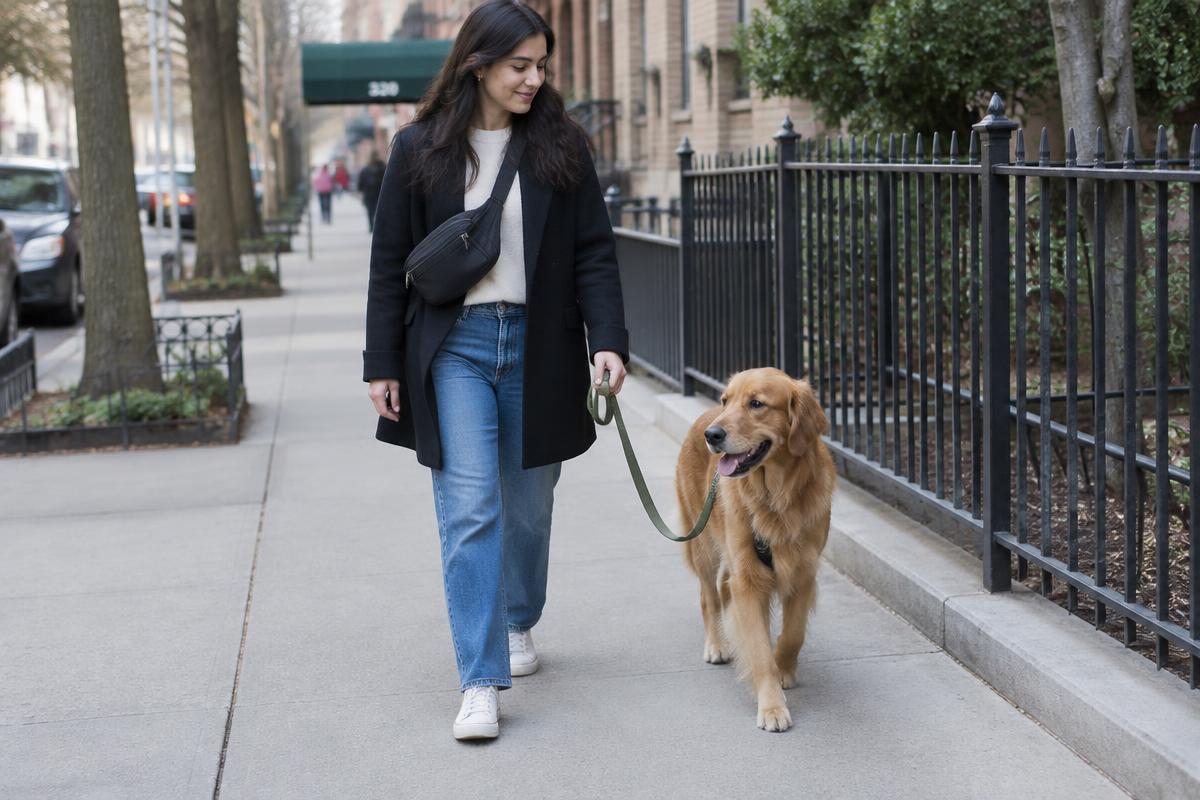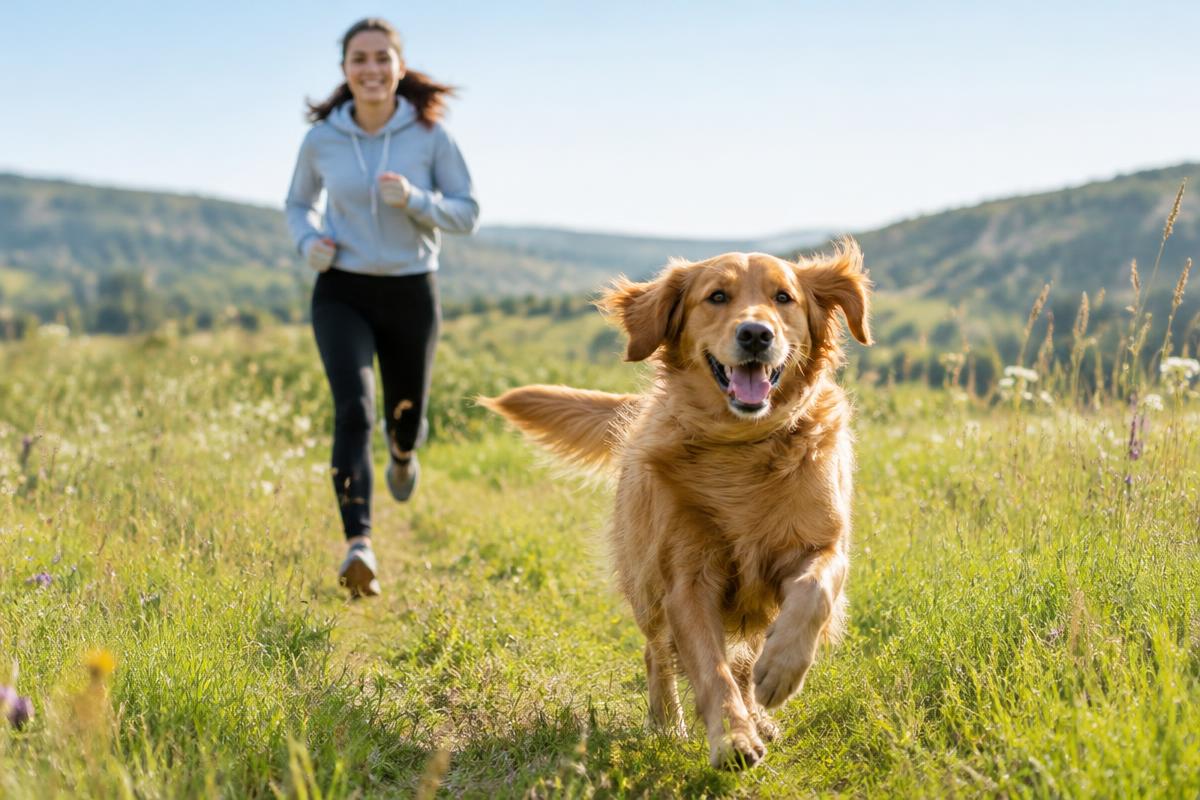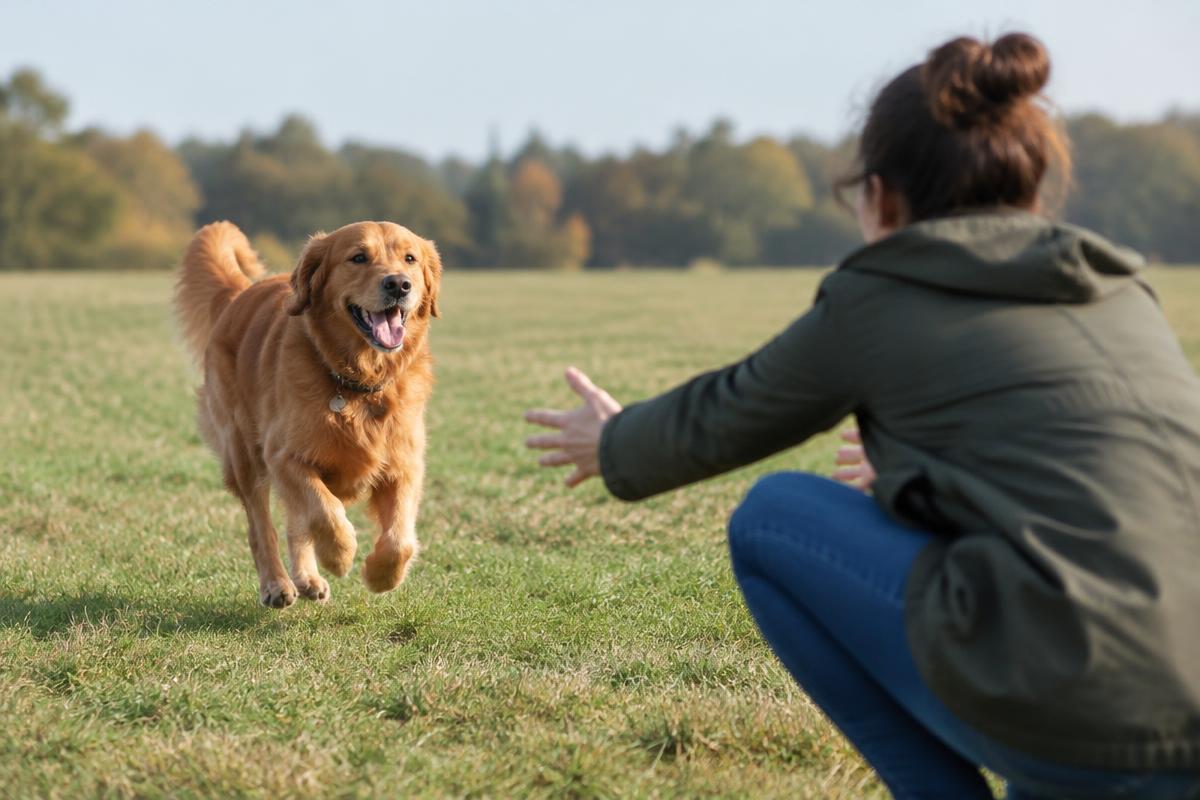
A reliable recall is one of the most important skills your dog can learn. It keeps them safe near roads, wildlife and other dogs, and gives them more freedom to explore.
Recall is built through repetition and rewards, starting somewhere easy and adding difficulty slowly.
Choose a recall cue
Pick a word or whistle you'll only use for recall, such as 'Here!'. If you've already used 'come' a lot without results, start fresh with a new word.
Step 1: Start at home
In a quiet room, say your cue once and reward your dog the moment they reach you with something they love — real chicken, cheese or a favourite toy. Repeat 5–10 times per session.
Step 2: Add distance and distraction
Move to the garden, then a quiet park on a long line (5–10 m). Only increase difficulty when your dog succeeds at least 8 times out of 10.
Step 3: Practice in real life
Call your dog during walks, reward generously, and then let them go back to playing. This teaches them that coming to you doesn't mean the fun ends.
Common mistakes
- Calling your dog to do something unpleasant, like a bath
- Repeating the cue again and again
- Chasing your dog (they think it's a game)
- Punishing a slow recall — they'll come even slower next time
Frequently asked questions
How long does recall training take?
Most dogs learn the basics in a few weeks, but proofing it around distractions can take several months of practice.
Should I use a long line?
Yes. It keeps your dog safe while giving them freedom, and prevents them learning to ignore you.
Key takeaways
- Use one unique recall cue.
- Reward every successful recall generously.
- Build up distractions gradually with a long line.
- Never punish your dog for coming to you.
This guide is for general information and doesn't replace advice from your veterinarian. If your dog seems unwell, contact your vet. Read our disclaimer.
Sources
Pawly Editorial Team
Pet care writers & editors
Pawly's articles are written and edited by our editorial team of experienced dog owners and pet-care writers. Every guide is built from published veterinary guidance — from organizations such as the AVMA, AAHA, WSAVA and the ASPCA — and is reviewed for accuracy before publishing and regularly after.
More from our writers →