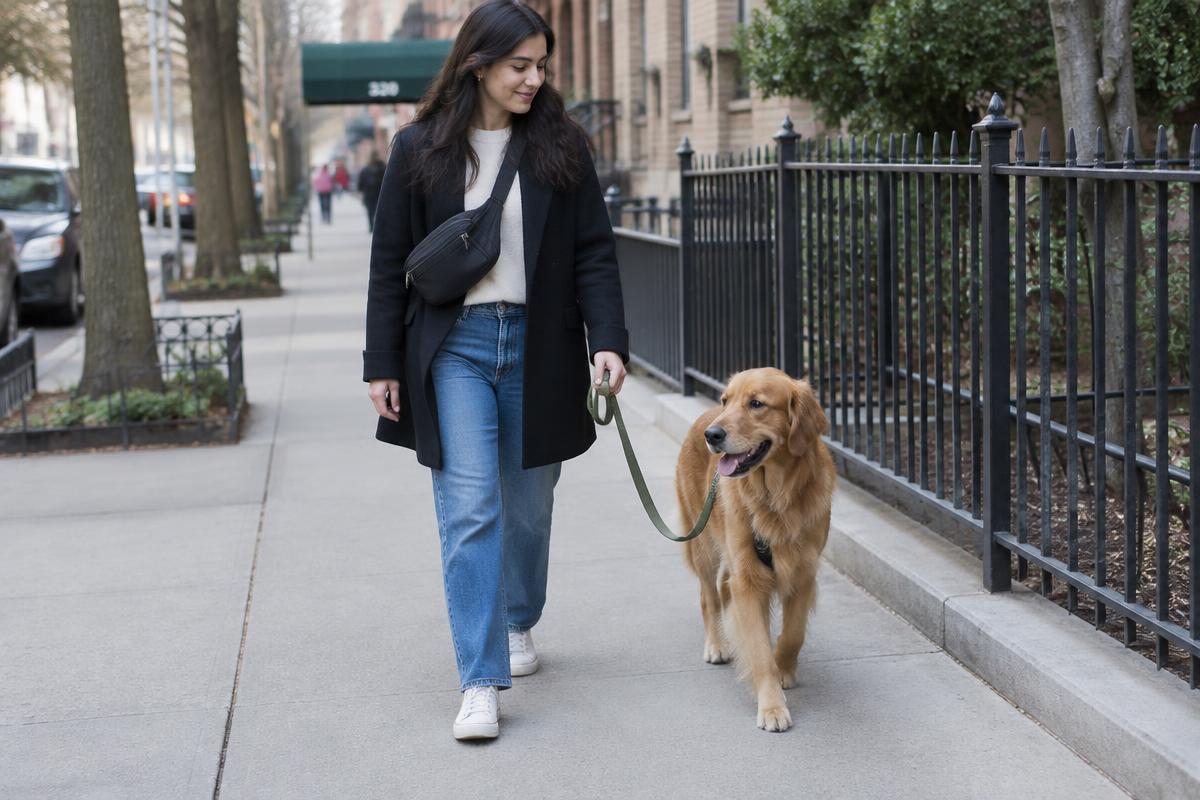
Dogs pull because it works — pulling gets them where they want to go. The fix is teaching that a loose leash is what moves you forward.
Start indoors
Practice in a quiet space. Reward your dog every few steps for walking next to you. Gradually increase steps between rewards before moving outside.
Stop or turn
When the leash tightens, stop and wait for slack, or calmly change direction. Move forward again only when the leash is loose. Consistency matters more than any single session.
Equipment
A well-fitted front-clip harness can reduce pulling while you train. Avoid prong, choke and shock collars, which can cause pain and fear and are discouraged by many veterinary behavior organizations.
Frequently asked questions
Is a retractable leash okay?
Retractable leashes teach constant tension and can cause injuries. A 1.5–2 m standard leash is better for training.
Key takeaways
- Pulling persists because it's rewarded.
- Reward a loose leash and stop when it tightens.
- Use a front-clip harness, not aversive collars.
This guide is for general information and doesn't replace advice from your veterinarian. If your dog seems unwell, contact your vet. Read our disclaimer.
Sources
Pawly Editorial Team
Pet care writers & editors
Pawly's articles are written and edited by our editorial team of experienced dog owners and pet-care writers. Every guide is built from published veterinary guidance — from organizations such as the AVMA, AAHA, WSAVA and the ASPCA — and is reviewed for accuracy before publishing and regularly after.
More from our writers →