Sharing a little of your food with your dog can be a lovely bonding moment — and some human foods make excellent, low-calorie treats.
The golden rule is that treats, including human food, should make up no more than 10% of your dog's daily calories.
Safe fruits
Remove seeds, pits and cores, and cut fruit into bite-sized pieces.
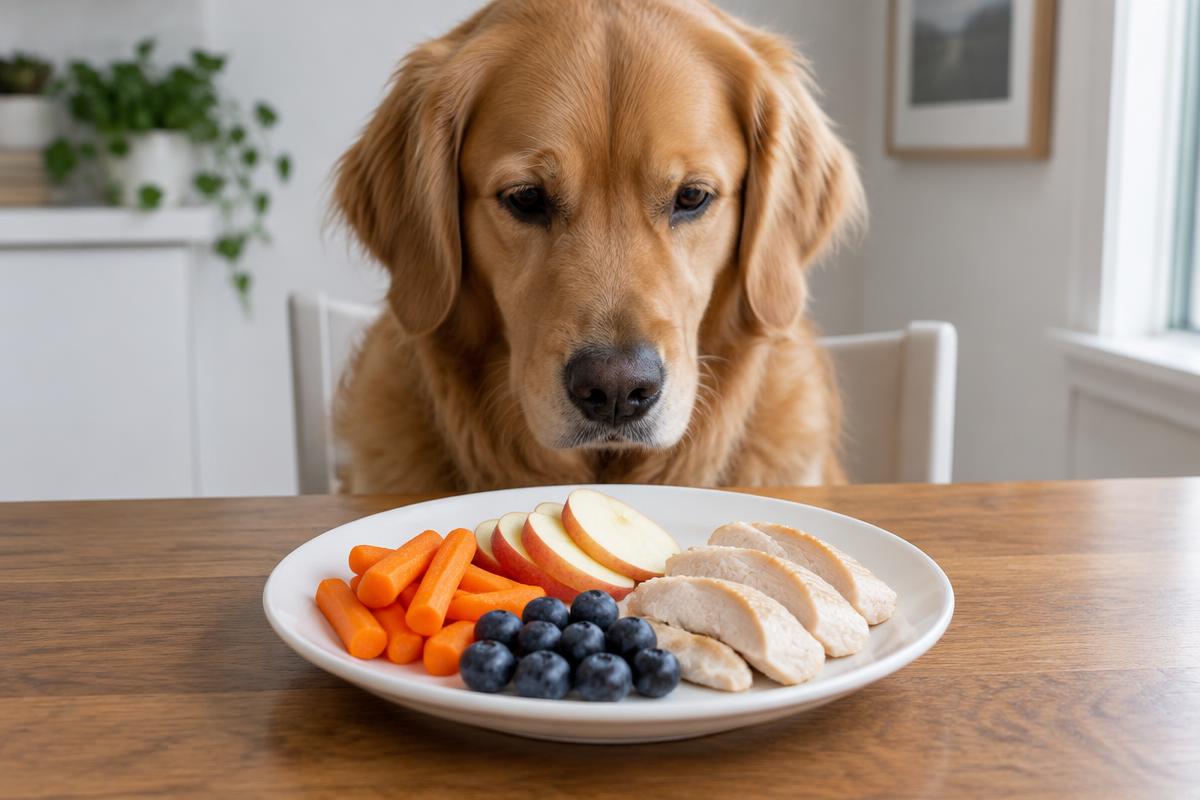
- Apple slices (no core or seeds)
- Blueberries
- Banana, in small amounts
- Watermelon (seedless, no rind)
- Strawberries
Safe vegetables
Many dogs love crunchy veg. Serve plain, raw or lightly steamed, with no butter, salt or seasoning.
- Carrots
- Green beans
- Cucumber
- Pumpkin (plain, cooked – not pie filling)
- Broccoli, in small amounts
Safe proteins and others
Cook meat and fish fully and remove all bones and skin.
- Plain cooked chicken or turkey
- Cooked salmon
- Scrambled or boiled egg
- Plain unsweetened yoghurt
- Plain cooked rice
Foods to always avoid
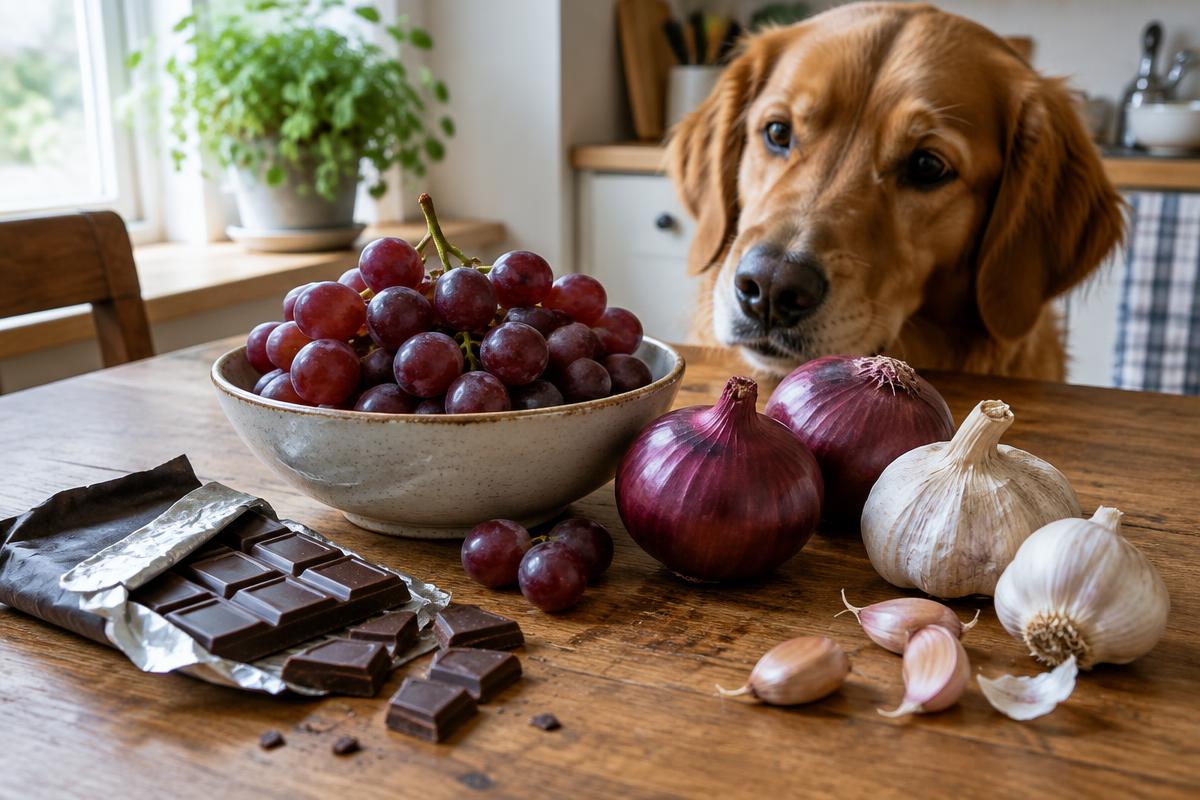
Some common foods are dangerous even in small amounts: chocolate, grapes and raisins, onions, garlic, macadamia nuts, xylitol (in sugar-free gum and some peanut butters), alcohol and cooked bones. See our full guide to toxic foods.
Frequently asked questions
Can dogs eat peanut butter?
Yes, if it is plain and contains no xylitol. Check the label every time.
Is cheese safe for dogs?
Small amounts are fine for most dogs, but many adult dogs are lactose intolerant and cheese is high in fat.
Key takeaways
- Keep treats under 10% of daily calories.
- Serve plain food with no seasoning.
- Introduce new foods one at a time.
- Know the toxic foods by heart.
This guide is for general information and doesn't replace advice from your veterinarian. If your dog seems unwell, contact your vet. Read our disclaimer.
Sources
Pawly Editorial Team
Pet care writers & editors
Pawly's articles are written and edited by our editorial team of experienced dog owners and pet-care writers. Every guide is built from published veterinary guidance — from organizations such as the AVMA, AAHA, WSAVA and the ASPCA — and is reviewed for accuracy before publishing and regularly after.
More from our writers →