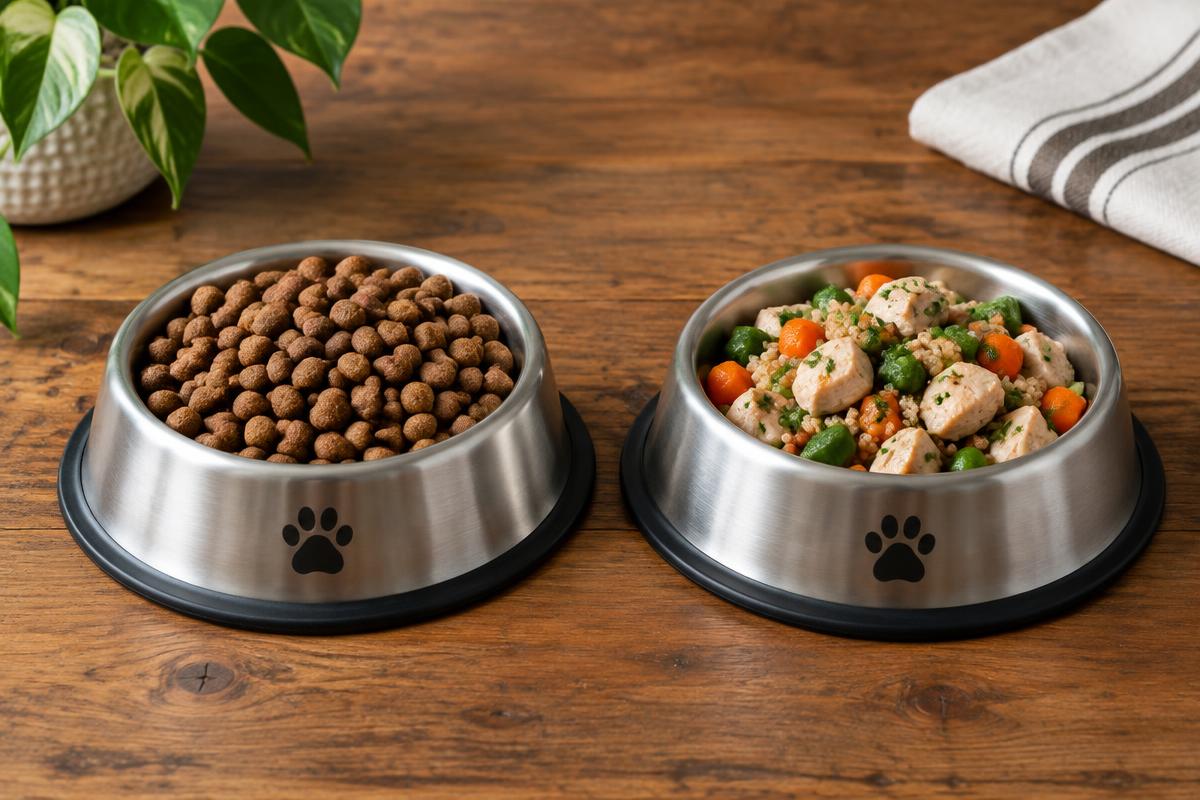
Few topics divide dog owners like diet. Some swear by raw feeding, others by fresh-cooked meals delivered to the door, while most dogs still eat dry kibble.
The most important question isn't the format but whether the food is complete and balanced for your dog's life stage. Here's how the options compare.
Dry food (kibble)
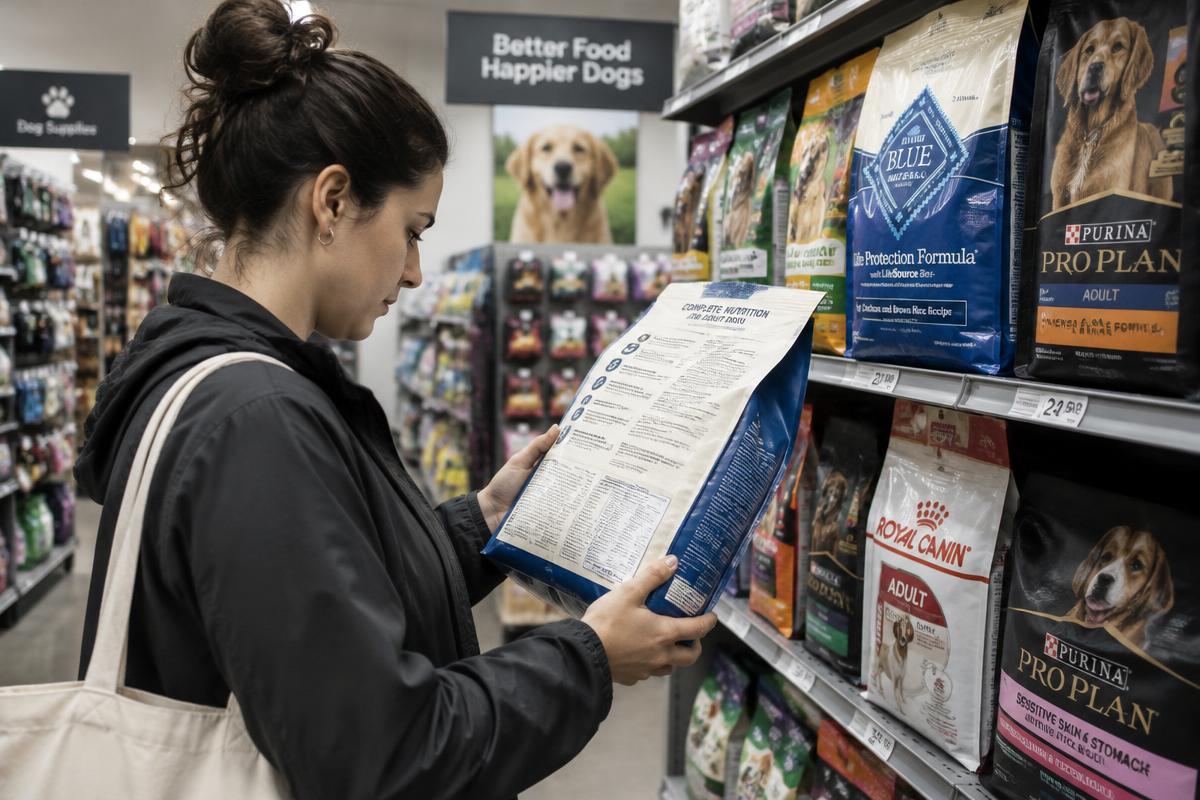
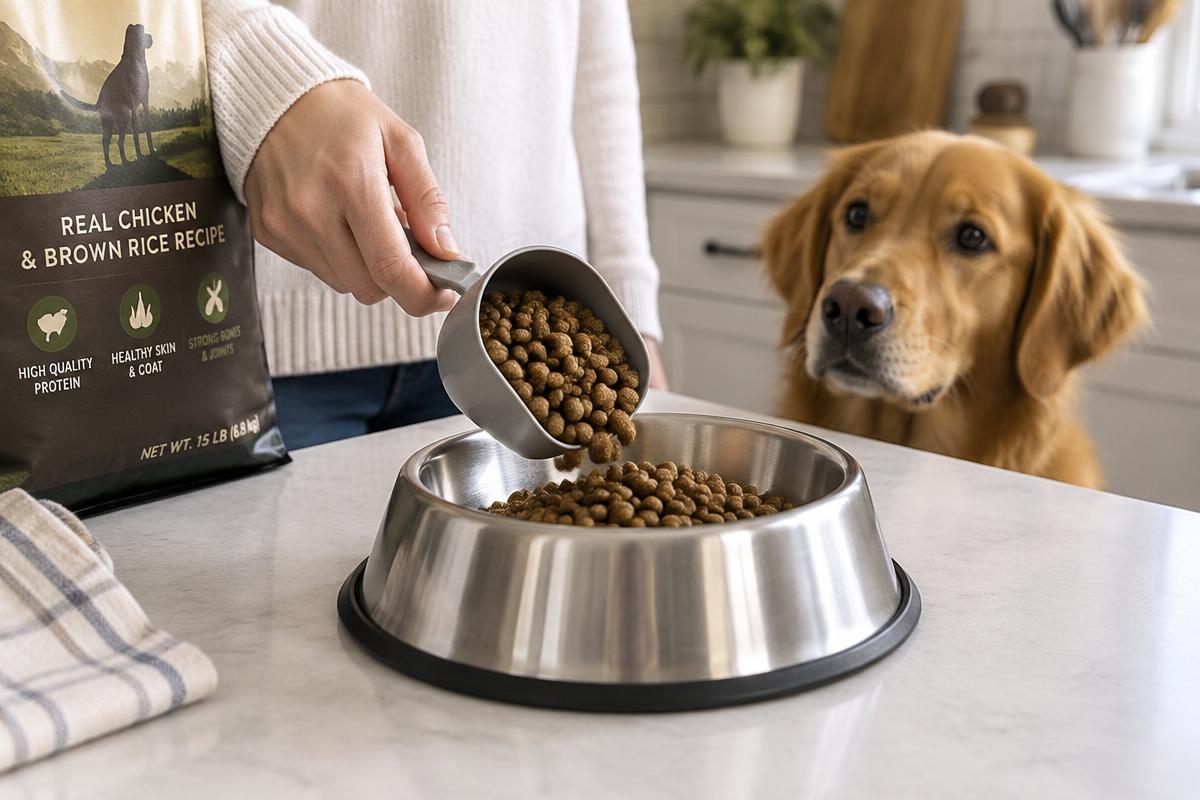
Kibble is affordable, convenient and easy to store. Quality varies widely, so look for a brand that employs a qualified nutritionist, runs feeding trials and meets WSAVA guidelines.
- Pros: cost, convenience, long shelf life, easy portion control
- Cons: highly processed, some dogs find it less tasty
Fresh-cooked food
Lightly cooked, refrigerated meals are popular for their palatability. When properly formulated they are a good option, but they cost much more than kibble and need fridge or freezer space.
Raw diets
Raw diets include uncooked meat, bones and organs. Supporters report shinier coats and smaller stools, but these claims are mostly anecdotal.
Studies have repeatedly found Salmonella, Listeria and E. coli in raw pet foods. This puts dogs and the people in their home — particularly children, elderly or immunocompromised people — at risk. The AVMA and FDA advise against feeding raw animal protein.
Home-made diets
Most home-cooked recipes found online are missing essential nutrients such as calcium, zinc or vitamin D. If you want to cook for your dog, use a recipe created by a board-certified veterinary nutritionist.
How to choose
Consider your budget, your household's health, and how your dog does on the food: steady weight, good energy, firm stools and a healthy coat are the signs that matter.
Frequently asked questions
Is grain-free food healthier?
Not necessarily. The FDA has investigated a possible link between some grain-free diets and heart disease (DCM). Discuss with your vet before choosing one.
Can I mix kibble with fresh food?
Yes, as long as you reduce the total portions so your dog doesn't gain weight.
Key takeaways
- A complete and balanced food matters more than format.
- Raw diets carry real bacterial risks for pets and people.
- Home-made diets need a vet nutritionist's recipe.
- Change foods slowly over a week or more.
This guide is for general information and doesn't replace advice from your veterinarian. If your dog seems unwell, contact your vet. Read our disclaimer.
Sources
- WSAVA Global Nutrition Guidelines
- U.S. FDA Center for Veterinary Medicine
- American Veterinary Medical Association (AVMA)
Pawly Editorial Team
Pet care writers & editors
Pawly's articles are written and edited by our editorial team of experienced dog owners and pet-care writers. Every guide is built from published veterinary guidance — from organizations such as the AVMA, AAHA, WSAVA and the ASPCA — and is reviewed for accuracy before publishing and regularly after.
More from our writers →