The feeding guide on a bag of dog food is a starting point, not a rule. Two dogs of the same weight can need very different amounts depending on age, activity, neuter status and metabolism.
Start with the label, then adjust
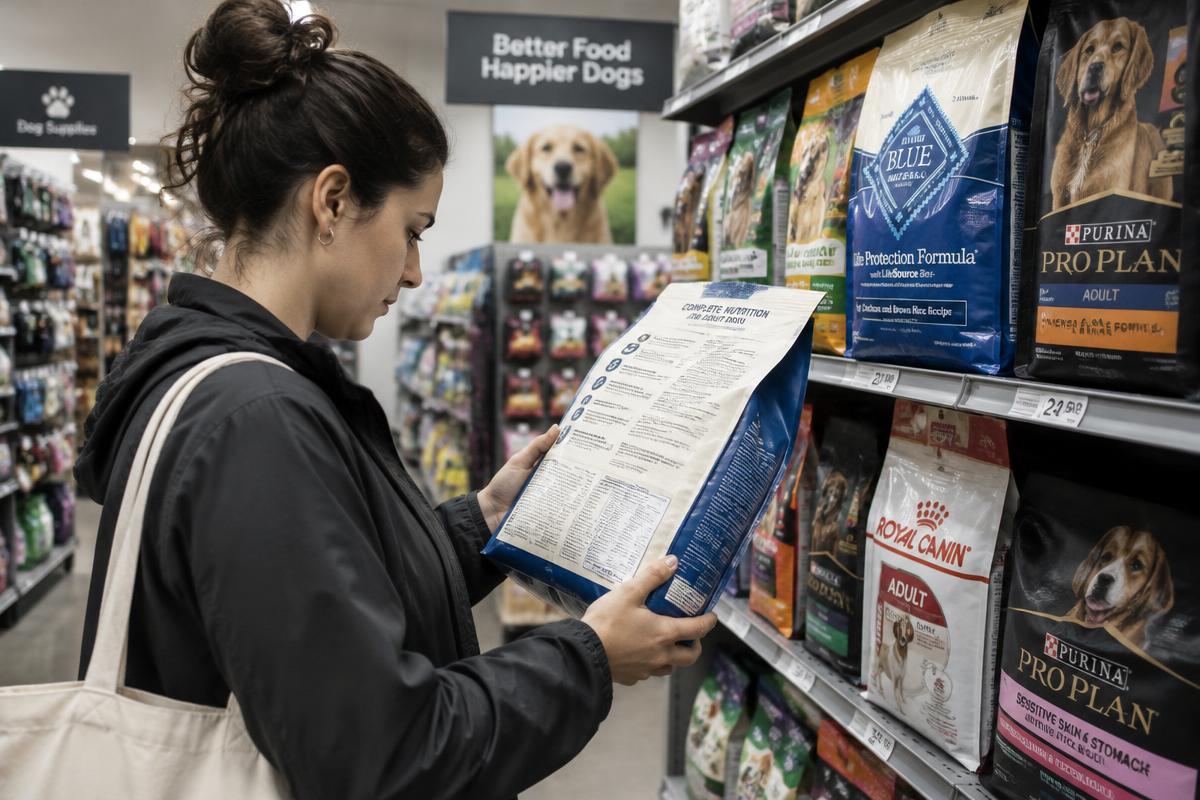
Find your dog's ideal (not current) weight on the label's chart and begin with the suggested amount. Weigh your dog every two to four weeks and adjust portions by about 10% if weight drifts up or down.
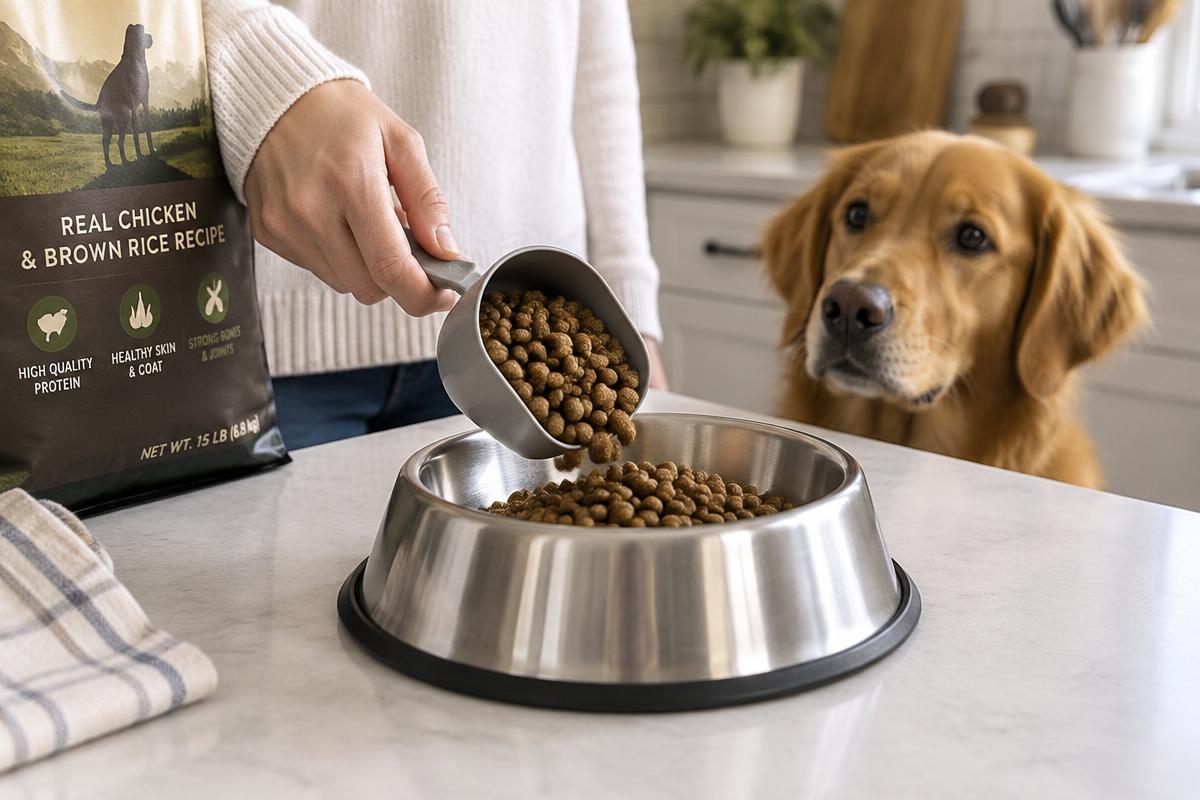
Use a measuring cup or, better, a kitchen scale. 'Scoops' vary widely and are one of the most common causes of overfeeding.
Use body condition, not just weight
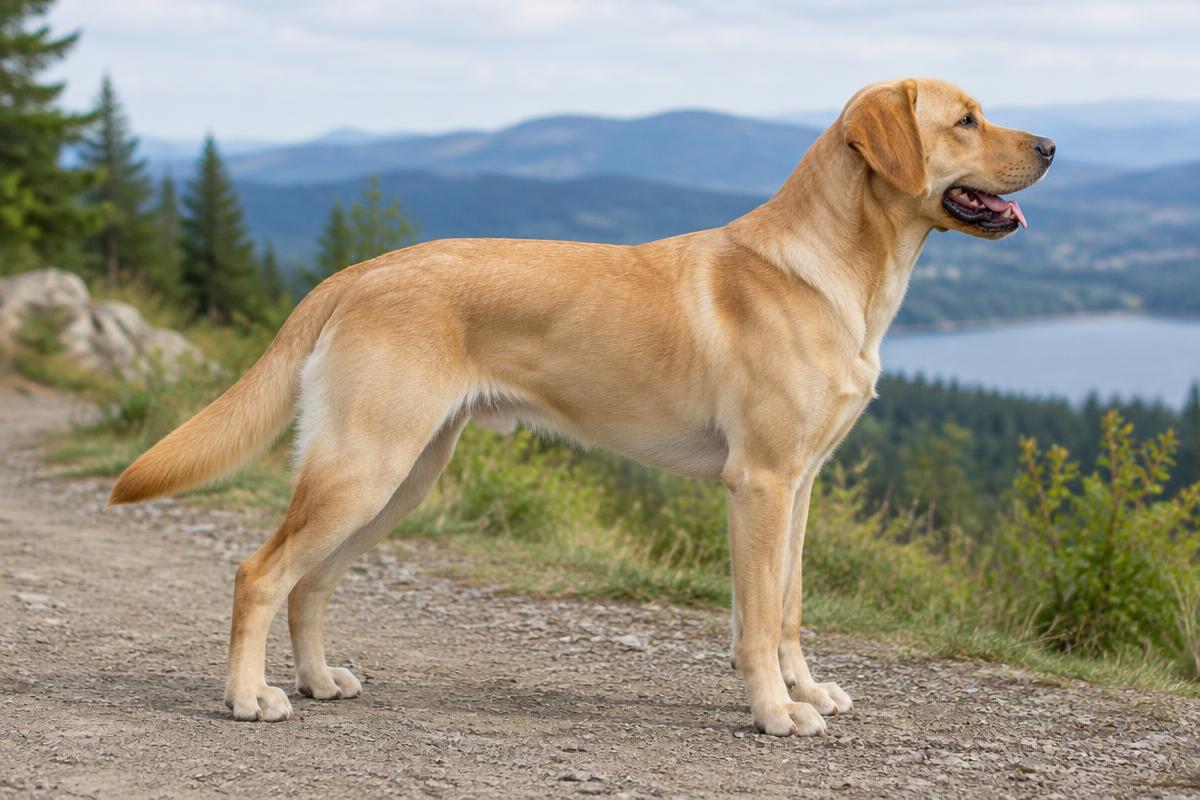
Veterinarians use a body condition score. At an ideal condition you can feel your dog's ribs easily under a thin layer of fat, see a waist from above, and see a slight tuck of the belly from the side.
How often to feed
Most adult dogs do well on two meals a day. Puppies usually need three to four smaller meals until around six months of age, then can move to two.
Don't forget treats
A common guideline is to keep treats to about 10% of daily calories. Reduce meal portions slightly on heavy training days.
Factors that change how much a dog needs
Two dogs of the same weight can need very different amounts of food. Energy needs depend on:
- Age — puppies need more calories per kilogram; seniors often need fewer
- Activity — working and sporting dogs need far more than couch companions
- Neuter status — neutered dogs often need fewer calories
- Breed and metabolism — some breeds gain weight easily
- Climate — dogs living outdoors in cold weather burn more energy
- Health conditions — such as thyroid disease or pregnancy
Understanding calories
Pet food labels list calories as kilocalories (kcal) per cup or per kilogram. Comparing foods by calories rather than by volume helps avoid overfeeding when switching brands, because one cup of a calorie-dense food can contain far more energy than another.
Vets estimate a dog's daily energy needs using its resting energy requirement and a multiplier for life stage and activity. Ask your vet to calculate a target if your dog needs to lose or gain weight.
Measuring portions accurately
Measuring cups are surprisingly inaccurate, and many owners scoop more than they think. A kitchen scale is the most reliable way to portion kibble. Weigh the daily amount once, divide it between meals, and you will see changes far more clearly.
Remember that everyone in the household needs to follow the same plan. Extra snacks from children or leftovers from the table add up quickly.
Feeding puppies
Puppies need diets formulated for growth, and large-breed puppies need foods designed to control growth rate, which helps reduce the risk of joint problems. Feed three to four meals a day until about four months, then usually two to three meals.
Weigh your puppy regularly and adjust portions as it grows. Most puppies move to adult food between nine and eighteen months, depending on breed size — your vet can advise on timing.
Helping an overweight dog
Excess weight is linked to arthritis, diabetes and a shorter lifespan. Weight loss should be gradual — commonly around 1–2% of body weight per week — and supervised by a vet.
Effective steps include measuring every meal, switching to a weight-management diet if recommended, using low-calorie treats such as green beans or carrot, and increasing activity gradually. Never sharply cut food without veterinary advice.
Feeding senior dogs
As dogs age, their metabolism and activity often slow, and many need fewer calories to avoid weight gain. However, some older dogs lose muscle and need more protein, not less. There's no single 'senior' formula — ask your vet to assess your dog's body condition and blood work before changing diets.
Older dogs may also develop dental problems that make eating hard. A sudden drop in appetite or difficulty chewing is a reason for a vet check rather than simply switching to softer food.
Feeding active and working dogs
Herding, hunting and sporting dogs can need significantly more energy than pet dogs. Their diets often need more fat and protein to fuel endurance. Feed the main meal well before or after intense exercise to reduce the risk of stomach upset and, in deep-chested breeds, bloat.
Switching foods safely
A sudden diet change can cause vomiting or diarrhoea. Transition over about a week:
- Days 1–2: 25% new food, 75% old food
- Days 3–4: 50% new, 50% old
- Days 5–6: 75% new, 25% old
- Day 7: 100% new food
Monitoring your dog over time
Weigh your dog every few weeks and check body condition monthly. Run your hands over the ribs, look from above for a visible waist, and from the side for a tucked belly. Keep a simple record so you can spot slow changes, which are easy to miss day to day.
If weight changes by more than about 10% without a change in diet or activity, see your vet.
Common feeding mistakes
Watch out for these frequent errors:
- Feeding by guesswork instead of measuring
- Ignoring treat and chew calories
- Following the bag exactly without checking body condition
- Feeding adult food to large-breed puppies
- Leaving food out all day for dogs that overeat
- Changing food too often
Treats and training rewards
Treats should make up no more than about 10% of daily calories. During heavy training periods, use part of your dog's regular food as rewards, or choose very small, low-calorie treats. Breaking treats into pea-sized pieces works just as well for motivation.
Frequently asked questions
Should I free-feed my dog?
Most dogs are better on measured meals. Free-feeding makes it harder to track appetite and often leads to weight gain.
My dog always seems hungry. Should I feed more?
Not necessarily — many dogs act hungry at ideal weight. Check body condition, and ask your vet about higher-fiber options if needed.
Should I free-feed my dog?
Free-feeding makes it hard to control portions and spot appetite changes. Scheduled meals are better for most dogs.
Wet or dry food?
Both can be complete and balanced. Wet food has more water and fewer calories per gram; dry food is convenient and usually cheaper.
My dog always seems hungry. Should I feed more?
Not necessarily. Many dogs are food-motivated. Check body condition, try puzzle feeders and high-fibre vegetables, and talk to your vet if hunger seems unusual.
How many times a day should an adult dog eat?
Most adult dogs do well with two meals a day.
Key takeaways
- Feed for ideal weight, not current weight.
- Weigh food and adjust in small steps.
- Treats should be around 10% of daily calories.
- Feed for your dog's age, activity and body condition — not just weight.
- Use a kitchen scale for accurate portions.
- Weight loss should be gradual and vet-supervised.
- Transition foods gradually over a week.
- Monitor weight and body condition regularly.
- Keep treats under about 10% of daily calories.
This guide is for general information and doesn't replace advice from your veterinarian. If your dog seems unwell, contact your vet. Read our disclaimer.
Sources
Pawly Editorial Team
Pet care writers & editors
Pawly's articles are written and edited by our editorial team of experienced dog owners and pet-care writers. Every guide is built from published veterinary guidance — from organizations such as the AVMA, AAHA, WSAVA and the ASPCA — and is reviewed for accuracy before publishing and regularly after.
More from our writers →