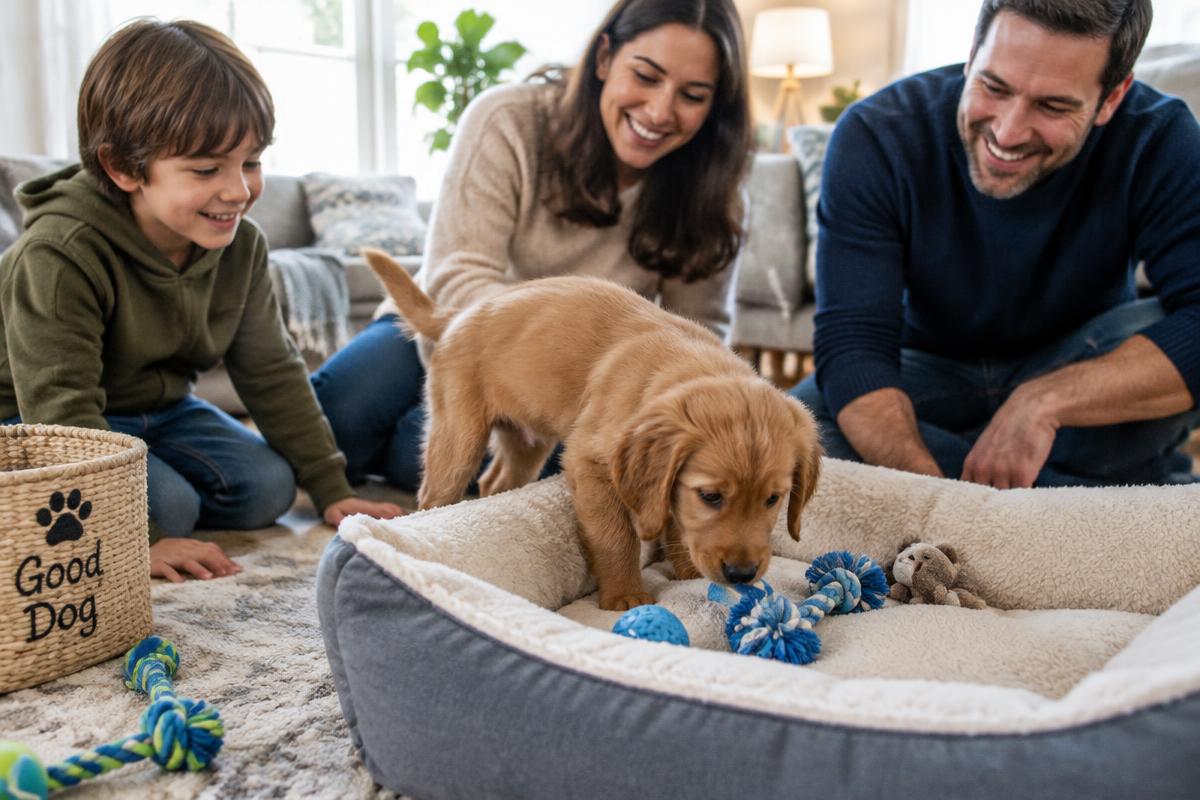
The first week sets the tone for your puppy's life with you. A calm routine, a puppy-proofed home and lots of rest help them settle quickly.
Essentials checklist
- Crate and soft bedding
- Food the breeder or shelter used
- Bowls, collar, ID tag and leash
- Chew toys of different textures
- Enzymatic cleaner for accidents
- A vet appointment within the first few days
Puppy-proof your home
Get down at puppy height. Tuck away cables, shoes, medications, cleaning products and houseplants. Use baby gates to limit access to a safe area.
The first nights
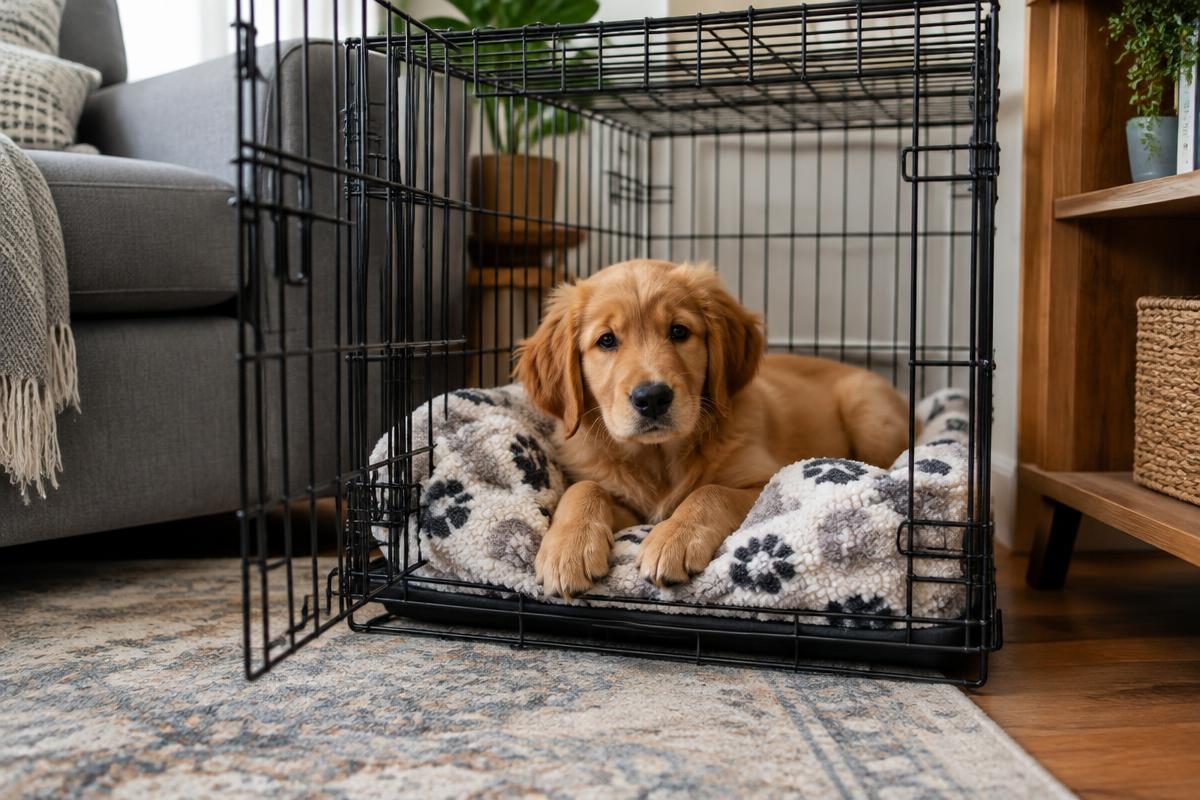
Place the crate near your bed so your puppy can hear and smell you. Expect one or two overnight toilet trips at first. Keep them quiet and boring, then back to bed.
Rest matters
Puppies commonly sleep 18–20 hours a day. Over-tired puppies bite and get frantic, so schedule naps just as you schedule play.
Day one: bringing your puppy home
Plan the pick-up for a time when you can be home for several days. Bring a towel or crate for the car journey and ask the breeder or shelter for a blanket that smells of the litter. Familiar scents can comfort a puppy during its first nights.
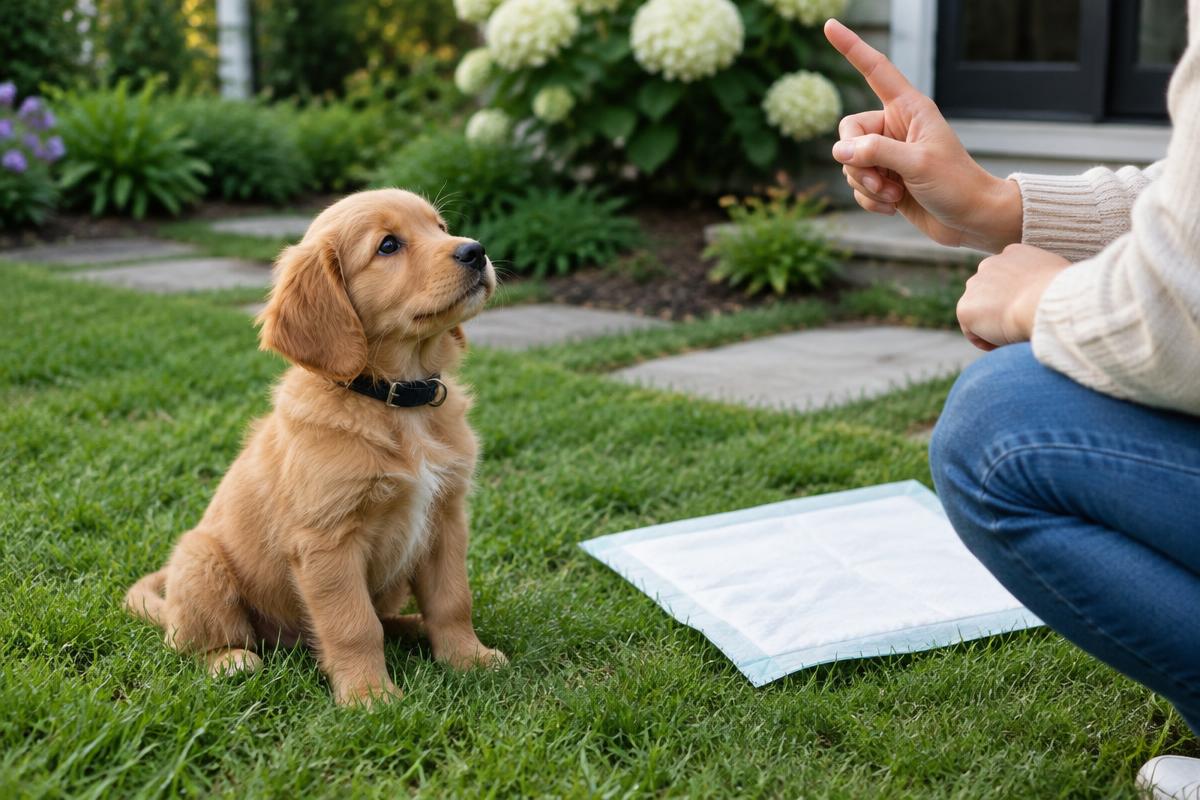
When you arrive, take your puppy straight to its outdoor toilet spot. Then let it explore one or two rooms quietly. Resist inviting friends round to meet the puppy — the first day should be calm.
Setting up a routine
Puppies thrive on predictability. From the first day, try to keep meals, toilet breaks, play and naps at similar times. A typical young puppy needs a toilet break after waking, after eating, after play and at least every one to two hours while awake.
Young puppies also need a lot of sleep — often 18 to 20 hours a day. An overtired puppy becomes nippy and wild, much like a tired toddler. Build regular naps in a crate or pen into the day.
Feeding in the first week
Keep feeding the same food the puppy was eating before, at least for the first week or two. Sudden changes can upset the stomach, especially during a stressful move. If you want to switch foods, transition gradually over seven to ten days.
Most puppies under four months eat three to four small meals a day. Follow the feeding guide on the label as a starting point and adjust with your vet based on body condition.
Your puppy's first vet visit
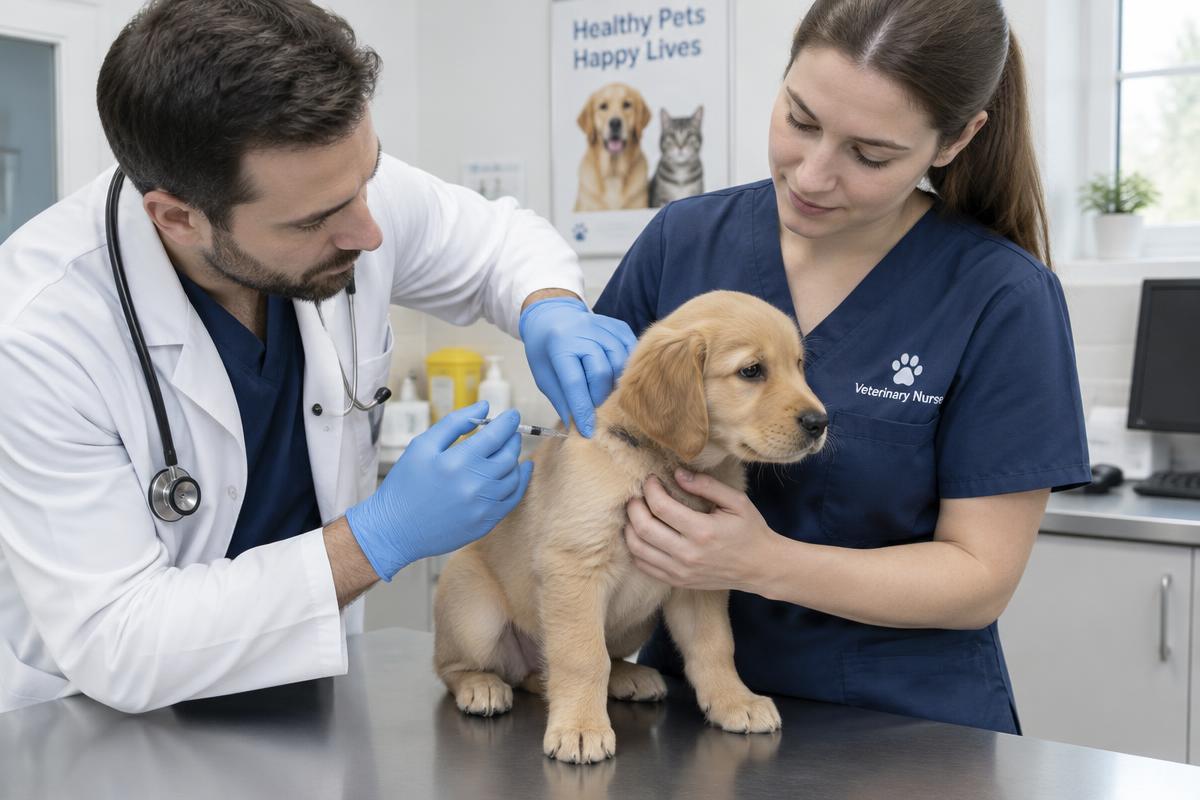
Book a vet appointment within the first few days. Bring any vaccination and deworming records. Useful questions to ask include:
- Which vaccinations are due and when?
- What parasite prevention do you recommend locally?
- When should we discuss spaying or neutering?
- Is the microchip registered with our details?
- Is my puppy at a healthy weight?
- When is it safe to start puppy classes?
First lessons to start now
Training begins the day your puppy comes home. Keep sessions to a few minutes and use small treats. Good first lessons include responding to its name, sitting, going into the crate calmly, and accepting gentle handling of paws and ears.
Puppies also nip a lot — it's how they explore. When teeth touch skin, stop play briefly and offer a chew toy instead. Never hit or shout; it can make the puppy more anxious and nippier.
When to call the vet urgently
Young puppies can become ill quickly. Contact a vet straight away if your puppy shows:
- Vomiting or diarrhoea, especially with blood
- Refusing food for more than a few meals
- Lethargy or weakness
- Difficulty breathing
- Pale gums
- A swollen or painful belly
Introducing other pets
If you have another dog, introduce them on neutral ground before bringing the puppy home, ideally on a short walk side by side. At home, supervise all interactions, give each dog its own bed and food bowl, and let the older dog retreat whenever it wants. Puppies can be exhausting for adult dogs, which need breaks.
With cats, start with the puppy on a leash or behind a gate. Reward the puppy for calm behaviour and never let it chase. Make sure the cat has high places and escape routes.
Handling, grooming and touch
The first week is ideal to start gentle grooming habits. Brush your puppy briefly every day, touch its paws and ears, and look at its teeth. Pair every touch with a treat. This makes future grooming and vet visits much easier.
Puppy-proofing room by room
Puppies explore with their mouths. Check each room for hazards:
- Kitchen: secure bins, keep food off counters, lock cleaning products away
- Living room: hide cables, remove small objects, move toxic house plants
- Bathroom: keep the toilet lid down and medicines locked away
- Garden: check fences, remove toxic plants and slug pellets
- Bedroom: put away socks, shoes, hair ties and jewellery
Biting and chewing
Puppy biting peaks around three to five months, especially during teething. Provide plenty of safe chew toys and rotate them to keep them interesting. When your puppy bites hands or clothes, calmly redirect it to a toy. If it keeps biting, pause the interaction briefly.
Over-tiredness is a common cause of frantic biting. If your puppy seems wild, it may simply need a nap.
Planning the weeks ahead
By the end of the first week, you should have a routine for meals, toilet breaks and sleep, a vet appointment booked, and a plan for socialisation and puppy classes. Keep notes on vaccination dates, weight and any questions for your vet.
Be patient with yourself. The first weeks with a puppy are tiring and many owners feel overwhelmed. Progress happens in small steps, and most of the challenges are temporary.
Your first-week checklist
By day seven, aim to have:
- A consistent toilet routine with one outdoor spot
- A crate or pen the puppy rests in calmly
- A first vet visit and microchip registration
- Simple training started: name, sit and calm handling
- A short list of safe socialisation outings
- Pet insurance considered or arranged
Frequently asked questions
When should I start training?
Right away — with short, fun sessions. Name recognition, sit and house training can all begin in the first week.
Should my puppy sleep in my bedroom?
Many owners place the crate in the bedroom for the first weeks. It comforts the puppy and makes night toilet trips easier.
How soon can my puppy have visitors?
A few calm visitors during the first week is fine. Keep visits short and let the puppy approach at its own pace.
Is it normal for my puppy to cry at night?
Yes, especially in the first few nights. Keeping the crate near you and taking quiet toilet breaks helps most puppies settle within a week or two.
When can my puppy go for walks?
Short walks in low-risk areas may be possible before vaccines are complete; ask your vet. Avoid areas used by many unknown dogs.
Key takeaways
- Prepare supplies and puppy-proof before arrival.
- Keep the crate close at night.
- Protect your puppy's sleep.
- Keep the first days calm and focus on routine.
- Don't change food immediately — transition over 7–10 days.
- See a vet within the first few days.
- Introduce other pets slowly and with supervision.
- Puppy-proof every room your puppy can access.
- Over-tiredness often causes biting — schedule naps.
This guide is for general information and doesn't replace advice from your veterinarian. If your dog seems unwell, contact your vet. Read our disclaimer.
Sources
Pawly Editorial Team
Pet care writers & editors
Pawly's articles are written and edited by our editorial team of experienced dog owners and pet-care writers. Every guide is built from published veterinary guidance — from organizations such as the AVMA, AAHA, WSAVA and the ASPCA — and is reviewed for accuracy before publishing and regularly after.
More from our writers →