Vaccines are one of the simplest, most effective ways to protect your dog from serious and sometimes fatal diseases. Yet many owners aren't sure which shots are essential, when puppies need them, or how often adult dogs need boosters.
This guide walks through the general framework veterinarians use. Your own vet will tailor the exact schedule to your dog's age, health, location and lifestyle.
Core vs. non-core vaccines
Veterinary guidelines divide vaccines into two groups. Core vaccines are recommended for every dog because the diseases are widespread, severe, or transmissible to people. Non-core (lifestyle) vaccines are recommended based on a dog's individual risk.
- Core: rabies, canine distemper, canine parvovirus and canine adenovirus (hepatitis) — often combined as a 'DAPP' or 'DHPP' shot.
- Common lifestyle vaccines: leptospirosis, Bordetella (kennel cough), canine influenza and Lyme disease.
A typical puppy schedule
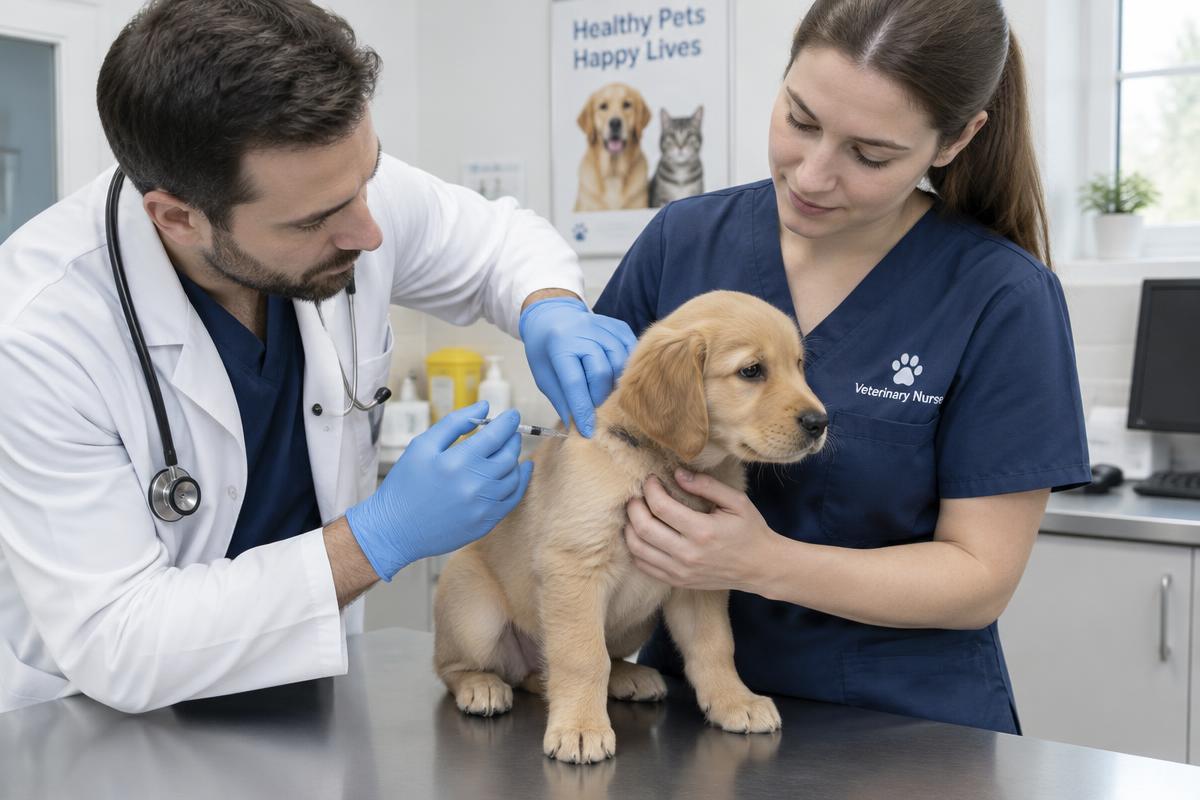
Puppies receive some immunity from their mother, but it fades unpredictably. That's why puppies get a series of combination vaccines, usually every 2–4 weeks starting at around 6–8 weeks of age, with the final dose given at 16 weeks or older.
Rabies is typically given once between 12 and 16 weeks, depending on local law. Until the series is complete, avoid areas with heavy unknown-dog traffic such as dog parks.
Boosters for adult dogs
A booster is usually given about a year after the puppy series. After that, many core vaccines are given every three years, while some lifestyle vaccines such as leptospirosis and Bordetella are given annually. Rabies intervals are set by local regulations.
Side effects and what's normal
Mild tiredness, a small lump at the injection site, or a slightly reduced appetite for a day are common. Facial swelling, hives, vomiting, or difficulty breathing are uncommon but need immediate veterinary attention.
Core vs non-core vaccines
Veterinary guidelines from AAHA and WSAVA divide dog vaccines into two groups. Core vaccines are recommended for every dog, regardless of lifestyle, because they protect against diseases that are widespread, severe or fatal. These typically include canine distemper virus, canine parvovirus, canine adenovirus (which protects against infectious hepatitis) and, in many countries, rabies.
Non-core vaccines are given based on a dog's individual risk. Your vet will ask about where you live, whether your dog visits kennels, groomers or dog parks, whether you hike in tick areas and whether you travel. Common non-core vaccines include leptospirosis, Bordetella (kennel cough), canine influenza and Lyme disease. In some regions leptospirosis is now considered effectively core because of how common it has become.
This risk-based approach exists so that each dog receives the protection it genuinely needs, without unnecessary injections. It is why two healthy dogs of the same age can leave the clinic with different vaccine plans.
Why puppies need a series of shots
Puppies receive antibodies from their mother's milk in the first days of life. These maternal antibodies offer temporary protection, but they also interfere with vaccines, and nobody can predict exactly when they fade in an individual puppy. That window can close anywhere from around six to sixteen weeks of age or later.
To make sure a puppy is protected as soon as maternal immunity wanes, vets give core vaccines every two to four weeks until the puppy is about sixteen weeks old. Current WSAVA guidance also recommends a further booster around six months to one year of age to catch any puppy whose response to the early doses was blocked. A single puppy shot is not enough, however healthy the puppy looks.
The diseases vaccines prevent
Canine parvovirus attacks the intestines and immune system, causing severe vomiting and bloody diarrhoea. It spreads through contaminated faeces and survives in the environment for months, so puppies can catch it without ever meeting a sick dog. Without intensive treatment, many affected puppies die.
Distemper affects the respiratory, digestive and nervous systems. Early signs look like a cold, but it can progress to seizures and permanent neurological damage. Infectious hepatitis damages the liver, kidneys and eyes.
Rabies is almost always fatal once symptoms appear and can spread to people, which is why it is legally required in many countries. Leptospirosis is a bacterial disease spread through the urine of wildlife and rodents, often via puddles and standing water, and it can also infect humans.
Adult boosters and titer testing
After the puppy series and the first-year booster, core vaccines such as distemper, parvovirus and adenovirus are commonly given every three years, because studies show protection lasts at least that long for most dogs. Rabies intervals depend on the product and local law. Bacterial vaccines like leptospirosis and Bordetella usually need yearly boosters because immunity is shorter.
Some owners ask about titer testing, a blood test that measures antibody levels. A positive titer for distemper or parvovirus is a good indication of protection and may help decide whether a booster is needed. Titers aren't a replacement for legally required rabies vaccination and aren't useful for every disease, so discuss them with your vet.
Side effects and what is normal
Most dogs show no reaction or only mild, short-lived effects such as tiredness, a reduced appetite, mild fever or a small, tender swelling at the injection site for a day or two. These are signs of the immune system responding.
Serious allergic reactions are rare but can happen, usually within minutes to hours. Contact a vet immediately if your dog develops facial swelling, hives, repeated vomiting, diarrhoea, difficulty breathing or collapse. If your dog had a reaction before, tell your vet; they may split vaccines across visits or give pre-treatment.
Keeping your puppy safe before vaccines are complete
Puppies still need socialisation during the vaccine series. Balance safety and learning with these steps:
- Avoid areas where unknown dogs toilet, such as busy parks and pet shop floors
- Carry your puppy in public places so it can see and hear the world safely
- Arrange play dates with healthy, fully vaccinated adult dogs you know
- Choose puppy classes that require proof of vaccination and clean floors
- Wash hands and change shoes after handling unknown dogs
Keeping records
Keep a copy of your dog's vaccination certificate at home and a photo on your phone. Kennels, groomers, training classes and travel authorities often ask for proof. Many vets also send reminders, but setting your own calendar alert for each booster helps avoid gaps in protection.
Frequently asked questions
Can my puppy go outside before finishing vaccines?
Yes, in low-risk places like your own yard or a friend's home with vaccinated dogs. Avoid dog parks and pet-store floors until your vet confirms the series is complete.
Are titer tests an alternative to boosters?
For some core vaccines, a blood titer can show existing immunity. It's not accepted in place of rabies vaccination in most areas. Ask your vet whether it suits your dog.
Can I vaccinate my dog myself?
It's not recommended. A vet examines your dog first, stores vaccines correctly and records them officially. Rabies vaccines must be given by a vet in most places.
What if my puppy misses a scheduled shot?
Contact your vet. Usually the series continues, but a long gap may mean restarting some doses.
Do indoor dogs need vaccines?
Yes. Diseases like parvovirus can be carried in on shoes, and rabies vaccination is often a legal requirement.
Key takeaways
- Every dog needs the core vaccines: rabies, distemper, parvovirus and adenovirus.
- Puppies need a series ending at 16 weeks or older.
- Lifestyle vaccines depend on where you live and what your dog does.
- Core vaccines protect every dog; non-core depend on lifestyle.
- Puppies need a series every 2–4 weeks until about 16 weeks.
- Many core boosters are given every three years after the first year.
- Report swelling, hives or breathing trouble after vaccination immediately.
This guide is for general information and doesn't replace advice from your veterinarian. If your dog seems unwell, contact your vet. Read our disclaimer.
Sources
Pawly Editorial Team
Pet care writers & editors
Pawly's articles are written and edited by our editorial team of experienced dog owners and pet-care writers. Every guide is built from published veterinary guidance — from organizations such as the AVMA, AAHA, WSAVA and the ASPCA — and is reviewed for accuracy before publishing and regularly after.
More from our writers →