Done well, crate training gives your dog a quiet den, helps house training, and keeps them safe when you can't supervise. The key is going slowly so the crate always means good things.
Choose the right crate
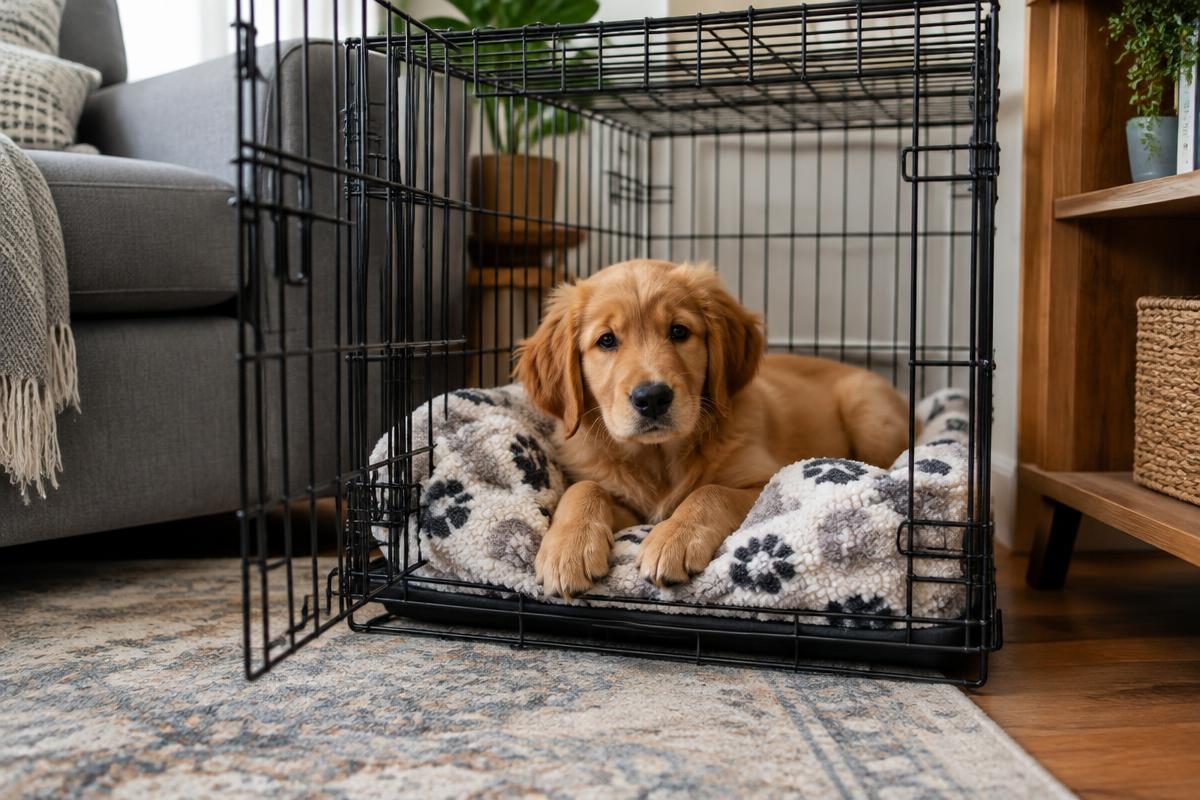
Your dog should be able to stand, turn around and lie down comfortably. For a growing puppy, choose an adult-size crate with a divider so the space can grow with them.
Step-by-step
- Put the crate in a living area with the door open, a soft bed and a few treats inside.
- Feed meals near, then inside, the crate.
- Close the door briefly while your dog eats, opening it before they finish.
- Gradually increase time with you nearby, then while you leave the room.
- Offer a long-lasting chew or food toy for longer periods.
Common mistakes
Never use the crate as punishment. Avoid long stretches: puppies can typically hold their bladder about one hour per month of age plus one, up to a few hours. Letting a dog out while crying can teach that crying works — wait for a brief pause.
Benefits of crate training
When introduced properly, a crate becomes a safe den rather than a cage. It helps with house training, protects puppies from chewing dangerous items when unsupervised, and makes car travel, vet stays and moving house less stressful.
A crate-trained dog can also rest more easily in unfamiliar places, which is useful during recovery from surgery or when staying with friends.
How long can a dog stay in a crate?
Time limits depend on age and bladder control. These are general maximums during the day, not targets:
- 8–10 weeks: 30–60 minutes
- 11–14 weeks: 1–3 hours
- 15–16 weeks: 3–4 hours
- Adult dogs: no more than about 4–6 hours, with exercise before and after
Building up to longer stays
Start by feeding meals in the crate with the door open. Once your dog is relaxed, close the door for a few seconds while it eats, then gradually lengthen the time.
Next, practise short absences: leave the room for a minute, return calmly, and let the dog out only when it is quiet. Slowly increase the time out of sight before leaving the house. Give a long-lasting chew or a stuffed food toy so the crate is associated with good things.
Dealing with whining
Some whining is normal in the first nights. If your puppy may need the toilet, take it out quietly on a leash and return it to the crate without play. If it is simply protesting, wait for a brief pause in the noise before opening the door so you don't reward the whining.
Persistent panic — drooling, scratching, trying to escape or injuring itself — is not normal and may indicate separation anxiety. Stop crating and talk to your vet or a qualified behaviourist.
Crate safety
Keep the crate safe and comfortable:
- Remove collars or harnesses inside the crate to avoid snagging
- Use only durable toys that can't be swallowed
- Place the crate away from radiators and direct sunlight
- Always provide access to water during longer stays
- Never use the crate for punishment
Crate training an adult or rescue dog
Adult dogs can learn to love a crate, but they may arrive with past experiences that make confinement feel stressful. Go more slowly than you would with a puppy. Leave the crate open in a quiet corner for several days, toss treats inside, and let the dog choose to explore it.
Feed meals near the crate, then just inside the door, then at the back. Only close the door once the dog is walking in happily. Some rescue dogs prefer a covered crate that feels like a den; others are more relaxed with all sides open. Watch the dog and adjust.
If a dog has never been crated and shows intense distress, a gated room or exercise pen can be a gentler alternative while you build confidence.
A sample first-week plan
This plan suits most puppies. Move on only when your dog is relaxed at the current step.
- Days 1–2: Crate door open, treats and toys inside, meals beside the crate
- Days 3–4: Meals inside the crate, door closed for the length of the meal
- Day 5: Short closed-door sessions of 5–10 minutes while you sit nearby
- Day 6: Leave the room briefly, returning before your dog becomes upset
- Day 7: Short naps in the crate during the day, with a chew toy
Using the crate at night
For the first weeks, many trainers suggest keeping the crate in or next to your bedroom. Puppies are social animals and being alone in a dark room is frightening. Hearing and smelling you nearby helps them settle, and you'll hear when they need a toilet break.
Once your puppy sleeps through the night calmly, you can gradually move the crate to its permanent location if you prefer. Do it a little at a time over several nights.
Crates for travel and vet visits
A crate-trained dog travels more safely. In the car, a secured crate protects your dog in sudden braking and prevents driver distraction. For air travel, airlines require crates that meet specific size and ventilation standards — check requirements well in advance and practise with the travel crate at home.
If your dog ever needs hospitalisation or strict rest after surgery, being comfortable in a crate makes recovery far less stressful. That alone is a strong reason to teach crate skills even if you don't use the crate daily.
Alternatives when a crate isn't right
Crates aren't the only option. An exercise pen gives more room while still keeping a puppy safe. A puppy-proofed small room with a baby gate also works. For dogs with separation anxiety, confinement can make panic worse, so work with a vet or qualified behaviourist on a training plan instead.
Phasing out the crate
When your dog is reliably house-trained and no longer chews household items — often between one and two years old — you can begin giving more freedom. Start by leaving the crate door open while you are out for short periods, with access to one safe room. Many dogs continue to use their crate as a resting place by choice.
Frequently asked questions
Should I cover the crate?
Many dogs settle better with a breathable cover over part of the crate. Make sure there's good airflow.
Should I cover the crate?
Some dogs settle better with a breathable cover. Make sure there's good airflow and that your dog can't pull the fabric in and chew it.
Wire or plastic crate?
Wire crates offer more airflow and visibility; plastic crates feel more den-like and are often needed for air travel.
Can I put two dogs in one crate?
It's generally not recommended. Each dog should have its own crate to avoid conflict and ensure enough space.
Should I put water in the crate?
For short stays it's usually unnecessary. For longer periods, attach a spill-proof bowl or bottle to the door.
Key takeaways
- Size the crate so your dog can stand and turn around.
- Build up time gradually with treats and meals.
- Never use the crate for punishment.
- Introduce the crate slowly with meals and rewards.
- Respect age-based time limits.
- Panic in the crate is a sign to stop and seek advice.
- Go slower with adult and rescue dogs.
- Keep the crate near you at night for young puppies.
- Crate skills make travel and vet recovery much easier.
This guide is for general information and doesn't replace advice from your veterinarian. If your dog seems unwell, contact your vet. Read our disclaimer.
Sources
Pawly Editorial Team
Pet care writers & editors
Pawly's articles are written and edited by our editorial team of experienced dog owners and pet-care writers. Every guide is built from published veterinary guidance — from organizations such as the AVMA, AAHA, WSAVA and the ASPCA — and is reviewed for accuracy before publishing and regularly after.
More from our writers →