Dogs' ear canals are L-shaped, which makes it easier for wax and moisture to get trapped. Breeds with floppy or hairy ears, and dogs who swim often, are especially prone to infections.
Most healthy ears need only occasional cleaning. Over-cleaning can actually cause irritation.
What you'll need
- A vet-approved dog ear cleaner
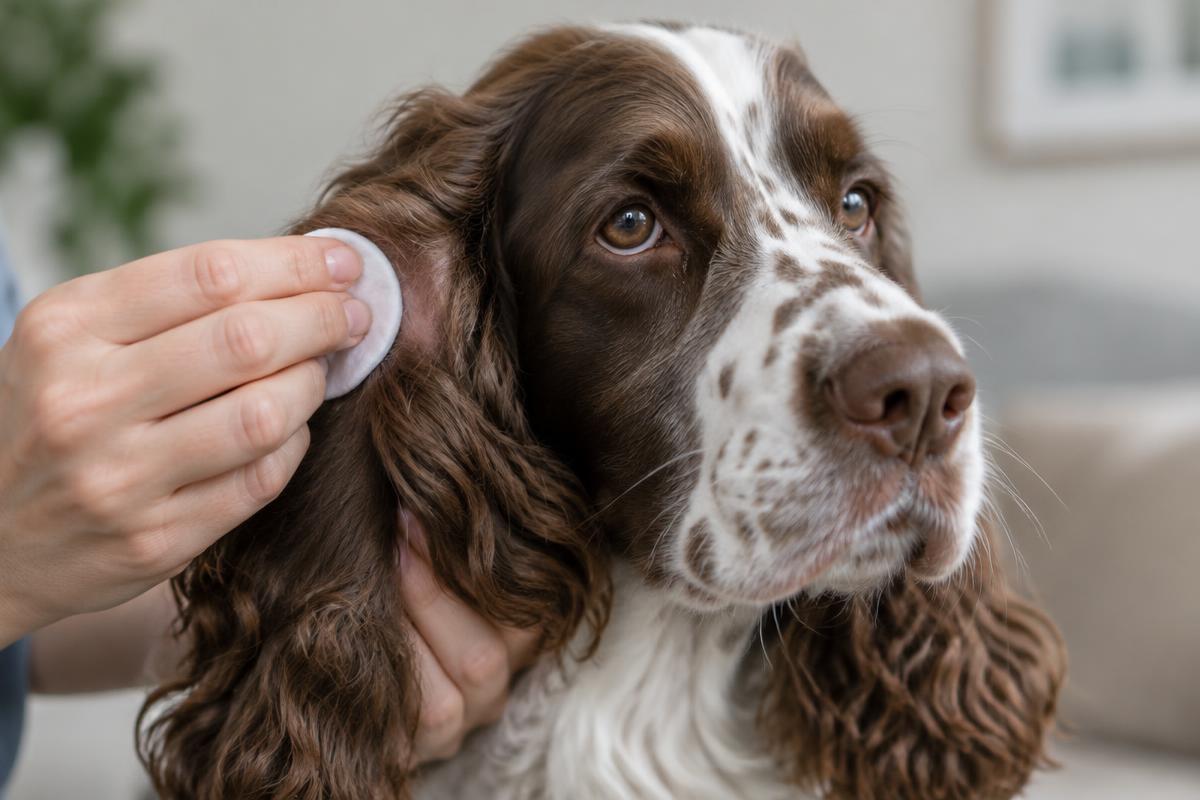
- Cotton balls or gauze (not cotton buds)
- Treats
- A towel
Step-by-step
- Gently lift the ear flap
- Fill the canal with cleaner as directed on the bottle
- Massage the base of the ear for 20–30 seconds
- Let your dog shake their head
- Wipe away loosened debris from the visible parts with cotton
- Reward your dog
How often
For most dogs, once a month is plenty. Dogs who swim or have chronic ear problems may need weekly cleaning, as advised by your vet.
Signs of an ear infection
Contact your vet if you notice redness, swelling, a bad smell, dark discharge, frequent head shaking or pain when the ear is touched. Do not clean a painful ear before a vet has checked it — the eardrum may be damaged.
Frequently asked questions
Can I use hydrogen peroxide?
It's not recommended. It can irritate healthy tissue inside the ear.
Why do my dog's ears smell like yeast?
That's often a sign of a yeast infection, commonly linked to allergies. See your vet.
Key takeaways
- Healthy ears need only occasional cleaning.
- Use a vet-approved cleaner, never vinegar or alcohol.
- Avoid cotton buds.
- Smelly, red or painful ears need a vet visit.
This guide is for general information and doesn't replace advice from your veterinarian. If your dog seems unwell, contact your vet. Read our disclaimer.
Sources
Pawly Editorial Team
Pet care writers & editors
Pawly's articles are written and edited by our editorial team of experienced dog owners and pet-care writers. Every guide is built from published veterinary guidance — from organizations such as the AVMA, AAHA, WSAVA and the ASPCA — and is reviewed for accuracy before publishing and regularly after.
More from our writers →