Dental disease is one of the most common health problems vets see in adult dogs. Daily brushing is the most effective way to prevent plaque build-up at home.
What you'll need
A soft dog toothbrush or finger brush and toothpaste made for dogs. Never use human toothpaste — many contain fluoride levels or xylitol that aren't safe to swallow.
Build up over two weeks
- Let your dog lick the toothpaste from your finger.
- Touch their lips and gums briefly, then reward.
- Rub the outer surfaces of a few teeth with your finger.
- Introduce the brush on the front teeth.
- Gradually work back to the molars, using small circles along the gumline.
Beyond brushing
Look for chews and diets with the Veterinary Oral Health Council (VOHC) seal, which shows they've met standards for reducing plaque or tartar. Professional cleanings under anesthesia remain important when recommended.
Why dental care matters
Dental disease is one of the most common health problems vets see in adult dogs. The American Veterinary Medical Association notes that most dogs show some signs of periodontal disease by the age of three. It begins when plaque — a sticky film of bacteria — builds up on the teeth and hardens into tartar, which irritates the gums.
Left untreated, gum inflammation can progress to infection, tooth loss and chronic pain. Because dogs rarely stop eating when their mouth hurts, the problem often goes unnoticed until it is advanced. Daily brushing is the single most effective thing you can do at home to slow plaque build-up.
Step-by-step brushing technique
Once your dog is comfortable with the toothbrush, a full session should take only one to two minutes.
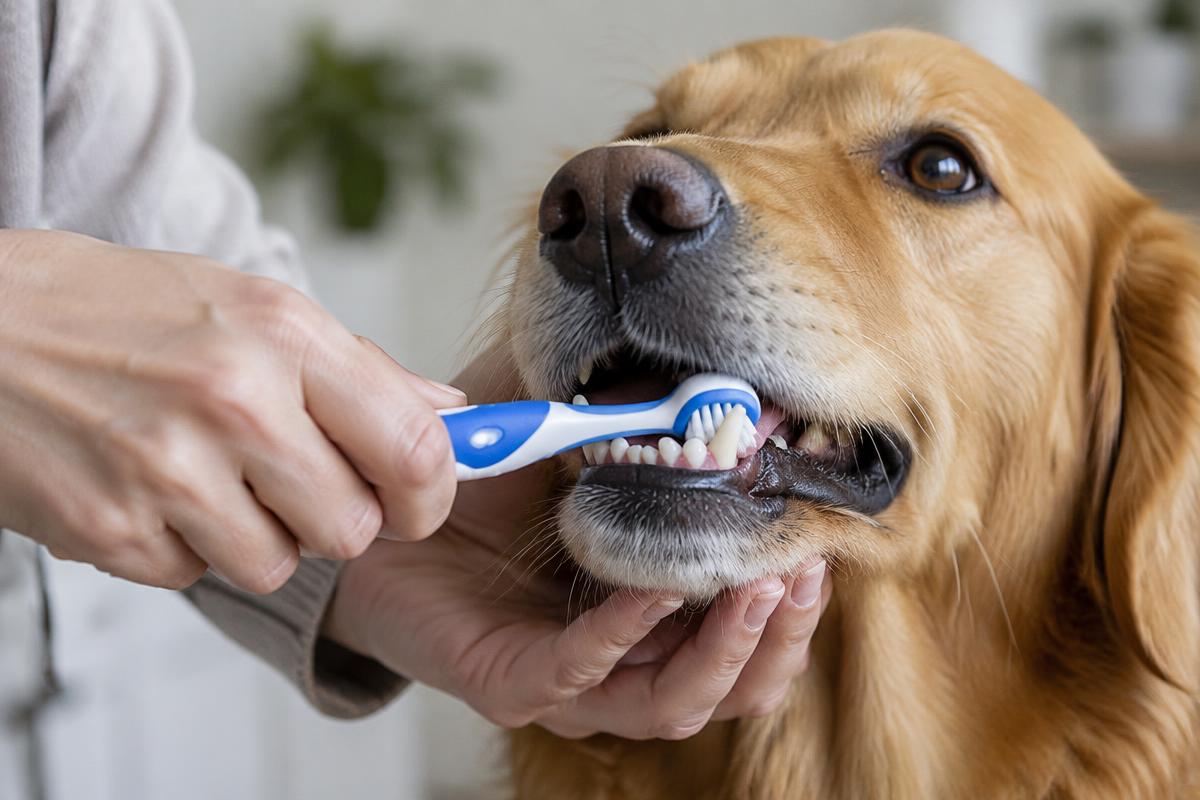
- Choose a calm moment, such as after a walk, and sit beside your dog rather than facing it.
- Lift the upper lip gently and place the brush at a 45-degree angle to the gum line.
- Use small, circular motions, working from the back teeth to the front.
- Focus on the outer surfaces — the tongue naturally cleans most of the inner surfaces.
- Pay special attention to the large upper back teeth and the canines, where tartar collects most.
- Finish with praise and a small reward or a short play session.
Choosing toothpaste and brushes
Always use toothpaste made for dogs. Human toothpaste often contains fluoride in amounts dogs shouldn't swallow, and some products contain xylitol, which is highly toxic to dogs. Dog toothpastes come in flavours such as poultry or beef that most dogs accept readily.
Finger brushes are a good starting point for small dogs and nervous beginners. Long-handled, angled brushes reach the back teeth of larger dogs more easily. Soft bristles are essential; you are cleaning the gum line, not scrubbing.
Dental chews, diets and water additives
Products can support brushing but rarely replace it. Look for items that carry the Veterinary Oral Health Council (VOHC) seal, which means the manufacturer has submitted data showing a reduction in plaque or tartar.
Avoid very hard chews such as antlers, hooves and real bones. They are a common cause of fractured teeth, particularly the large upper premolars. A good rule of thumb: if you can't press your thumbnail into it, it is too hard for your dog's teeth.
Signs of dental problems
Book a dental check with your vet if you notice any of the following:
- Persistent bad breath
- Red, swollen or bleeding gums
- Yellow or brown tartar along the gum line
- Loose, broken or discoloured teeth
- Dropping food, chewing on one side or pawing at the mouth
- Swelling below the eye, which can indicate a tooth root abscess
Professional cleanings
Even with good home care, many dogs eventually need a professional cleaning. This is done under general anaesthesia so the vet can examine every tooth, take dental X-rays and clean below the gum line, where most disease occurs.
So-called anaesthesia-free cleanings only remove visible tartar from the crown. They don't address disease beneath the gums and can give a false sense of security, which is why veterinary dental organisations do not recommend them.
Training a resistant dog
If your dog dislikes having its mouth touched, go back several steps. Start by simply touching the lips for one second and rewarding. Over days, progress to lifting the lip, then rubbing a gum with your finger, then a finger brush with paste. Keep sessions positive and very short, ending before your dog becomes uncomfortable.
Some dogs accept brushing more easily if they can lick toothpaste off the brush first. Others prefer a cloth wrapped around a finger. Use whatever your dog tolerates, then build up.
Puppy dental care
Puppies have 28 baby teeth, which are replaced by 42 adult teeth between roughly three and seven months. Teething can make gums sore, so keep early brushing gentle and focus on getting the puppy used to having its mouth handled.
Check that baby teeth fall out as adult teeth come in. Retained baby teeth, especially the canines, can cause crowding and should be checked by a vet.
Breeds prone to dental disease
Small and toy breeds, such as Yorkshire Terriers, Chihuahuas, Dachshunds and Poodles, are especially prone to dental disease because their teeth are crowded in a small mouth. Flat-faced breeds also often have misaligned teeth. These dogs benefit greatly from daily brushing and regular dental checks.
A weekly dental routine
A simple routine helps keep teeth healthy:
- Brush daily, or at least three to four times a week
- Check gums and teeth once a week for redness or tartar
- Offer a VOHC-approved dental chew if your dog enjoys them
- Replace the toothbrush every three months
- Have teeth checked at every annual vet visit
Dental health and the whole body
Gum disease isn't just about the mouth. Bacteria from infected gums can enter the bloodstream, and vets have long linked severe periodontal disease with problems in other organs. Good dental care contributes to your dog's overall health and comfort.
Dogs that have had painful teeth treated are often described by their owners as more energetic and playful afterward — a reminder of how much hidden mouth pain can affect wellbeing.
Frequently asked questions
Is bad breath normal?
Persistent bad breath often signals dental disease. Have your vet take a look.
Is it too late to start brushing an older dog?
No. Older dogs can learn to accept brushing. If the gums are already sore, have your vet check and treat the mouth first.
Can I use baking soda?
It isn't recommended. It tastes unpleasant to dogs and offers no advantage over a dog toothpaste.
How much does a professional cleaning cost?
Prices vary widely by location and by how much treatment is needed, including X-rays and extractions. Ask your vet for an estimate.
Do dogs need dental X-rays?
Yes, they are important because much dental disease occurs below the gum line, where it can't be seen.
Key takeaways
- Daily brushing is the gold standard.
- Use dog-specific toothpaste only.
- VOHC-accepted products can help between brushings.
- Most adult dogs develop some dental disease — prevention starts early.
- Never use human toothpaste; xylitol is toxic to dogs.
- Choose VOHC-approved chews and avoid very hard items.
- Go slowly with resistant dogs and keep it positive.
- Small breeds are especially prone to dental disease.
- Dental health affects overall wellbeing.
This guide is for general information and doesn't replace advice from your veterinarian. If your dog seems unwell, contact your vet. Read our disclaimer.
Sources
Pawly Editorial Team
Pet care writers & editors
Pawly's articles are written and edited by our editorial team of experienced dog owners and pet-care writers. Every guide is built from published veterinary guidance — from organizations such as the AVMA, AAHA, WSAVA and the ASPCA — and is reviewed for accuracy before publishing and regularly after.
More from our writers →